Article: Outswing vs. Inswing Doors: Which Latch Guard Do You Need?
Outswing vs. Inswing Doors: Which Latch Guard Do You Need?
Before you pick a latch guard by size or finish, answer one question: which way does your door swing? A latch guard made for an out-swinging door is a different product from one made for an in-swinging door. Buy the wrong type and it won't fit the way it should. This guide shows how to tell which door you have, why it matters, and which LatchProtector or Latch-Gard model fits each one. It's written for homeowners and for business and facility owners.
How to tell if your door swings in or out
Stand on the side of the door you want to protect, usually the outside or the hallway side.
- If you pull the door toward you to open it, it's an outswing door.
- If you push it away from you, it's an inswing door.
The hinges are a quick second check. On an outswing door you can usually see the hinge knuckles from the outside. On an inswing door, the hinges are on the inside.
Outswing doors are common on commercial back doors, service doors and many business exits. Most house front doors and apartment entry doors swing in. Always check your own door instead of assuming.
Why swing direction changes the latch guard you need
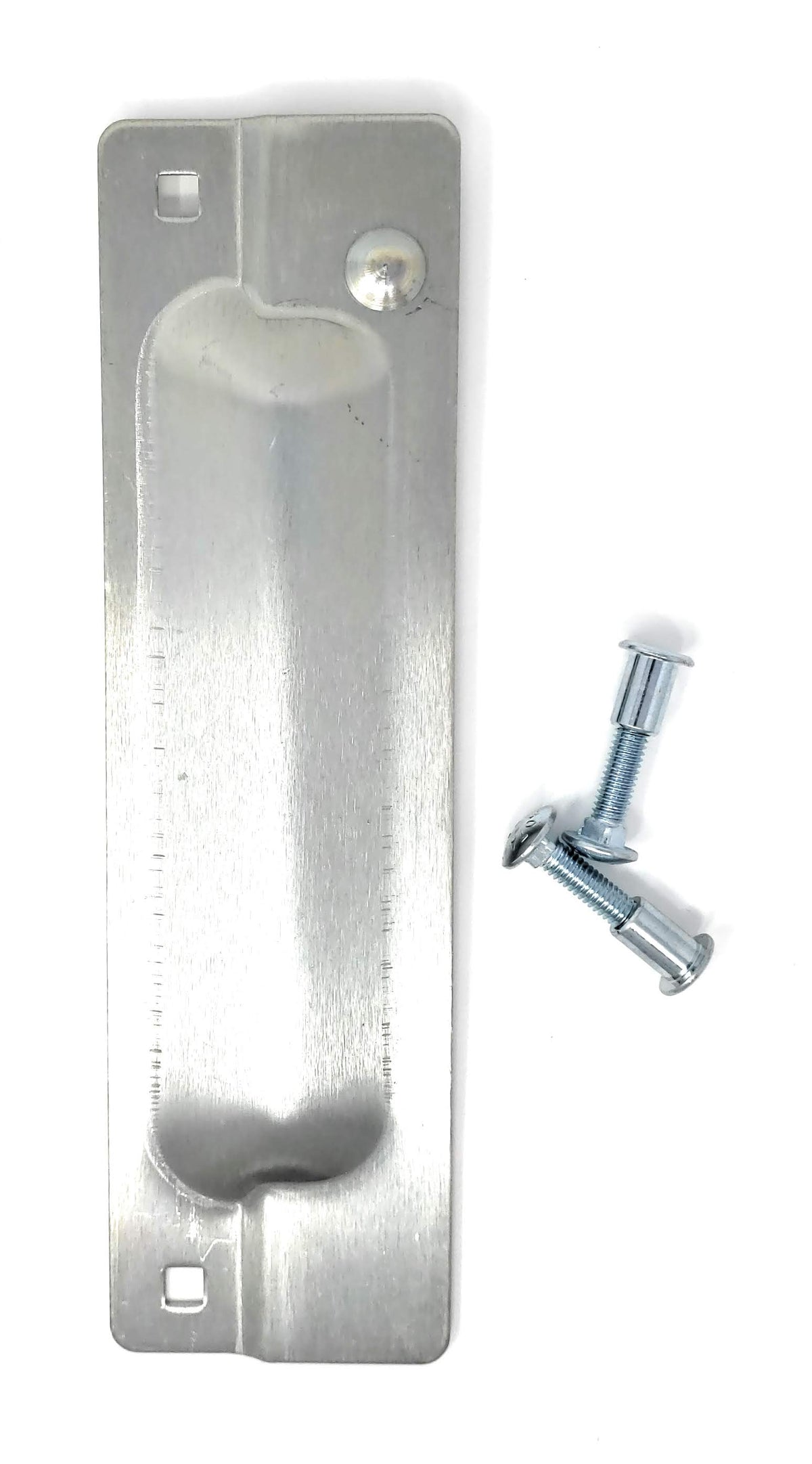
On an outswing door, the edge of the door where the latch sits is on the outside, along with the gap between the door and the frame. An outswing latch guard is a steel plate that bolts to the outside face of the door and covers that latch area, so the latch bolt can't be reached and pushed back.
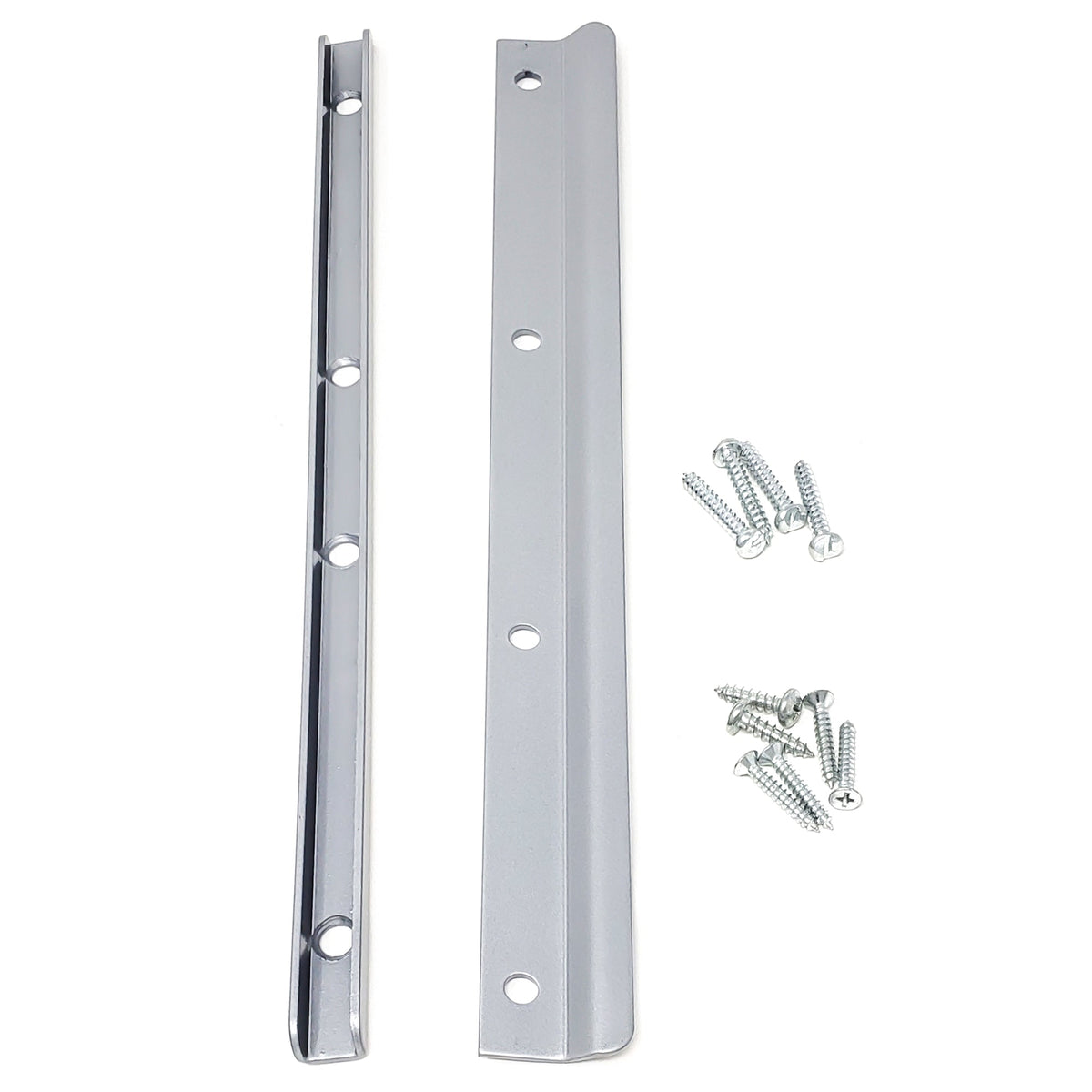
On an inswing door, the door opens into the room, so a plate built for an outswing door isn't the right design. Inswing doors use a different approach: a latch shield with an interlocking bracket that mounts at the jamb.
Latch guards for outswing doors
Most of our catalog is for out-swinging doors. Two popular 3 x 11 inch choices are below.
Latch-Gard LG110ZSF: 3 x 11 inch with jamb pin ($15.50)

The Latch-Gard LG110ZSF is a 3 x 11 inch plate made from 13 gauge zinc-plated steel. A jamb pin helps keep the door from being pried off the jamb. The cutout clears a cylindrical lock's rose or escutcheon up to 3-1/2 inches in diameter. It's listed for 1-3/4 inch thick out-swinging exterior commercial steel or wood doors, and it's reversible for left- or right-hand openings. It comes with SF710 tamper-resistant flush fasteners, which help the weatherstrip seal and reduce snags on the inside. Latch-Gard models are made in the USA.
LATCHPROTECTOR LP212: 3 x 11 inch, no jamb pin ($12.50)

The LATCHPROTECTOR LP212 is also 3 x 11 inches of 12 gauge zinc-plated steel. It doesn't have a jamb pin, so you only drill two holes in the door. It fits cylindrical locks with a rose or escutcheon up to 3-1/2 inches and a 2-3/4 inch backset, on 1-3/4 inch thick out-swinging doors. It's reversible and ships with two carriage bolts and tamper-resistant flush fasteners.
Other outswing situations:
- Narrow space beside the lock? The LP230 is a 1-3/4 x 10 inch narrow plate ($12.95).
- Knob and deadbolt together? The LP215 has a full-length cutout ($15.75).
- Mortise lock? See our guide to latch guards for mortise vs. cylindrical locks.
Latch guard for inswing doors: LATCHPROTECTOR LP300 ($8.75)
The LATCHPROTECTOR LP300 is a 12 inch latch shield made for in-swinging doors. Its interlocking bracket helps block forced entry on doors that swing inward. It's listed for residential, commercial and industrial wood or metal doors, including apartments, garages and other inswing openings. The gray painted steel can be painted to match your door and hardware.
To install it, hold it in place, mark the holes, pre-drill, and fasten. The jamb-mounted bracket uses one-way tamper-resistant screws, so you'll need a one-way driver bit or a large flat screwdriver.
Quick fit checklist before you order
- Swing direction: pull to open from outside = outswing. Push = inswing (LP300).
- Door thickness: the LG110ZSF and LP212 are listed for 1-3/4 inch thick doors.
- Lock type: a knob or lever with a round rose is usually a cylindrical lock. A tall faceplate on the door edge usually means a mortise lock.
- Rose or escutcheon size: measure the diameter. The LG110ZSF and LP212 clear up to 3-1/2 inches.
- Backset: measure from the door edge to the center of the knob or lever. The LP212 lists a 2-3/4 inch backset.
- Jamb pin or not: the LG110ZSF's pin needs one extra hole drilled in the jamb. The LP212 has no pin.
- Deadbolt above the knob? Look at a full-cutout model like the LP215.
Installing an outswing latch guard
For the LG110ZSF, drill two holes through the door and one hole in the jamb for the pin, then fasten it with the included carriage bolts and flush fasteners. The LP212 needs just the two holes through the door. Watch the LG110ZSF video before you drill:
FAQ
Can I use an outswing latch guard on an inswing door?
No. Outswing plates are made to bolt to the outside face of an out-swinging door. For an inswing door, use an inswing latch shield like the LP300.
Does the LP300 work on metal doors?
Yes. It's listed for wood or metal doors in residential, commercial and industrial settings.
What's the difference between the LG110ZSF and the LP212?
Both are 3 x 11 inch zinc-plated plates for cylindrical locks with a rose up to 3-1/2 inches, and both are reversible. The LG110ZSF is 13 gauge, adds a jamb pin and is made in the USA by Latch-Gard. The LP212 is 12 gauge, has no pin and installs with two holes in the door.
Do these fit left- and right-hand doors?
The LG110ZSF and LP212 are both listed as reversible for right or left openings.
What if I'm not sure which model fits?
Email sales@latchprotector.com with your door's swing direction, thickness, lock type and rose size, plus a photo of the latch side. We'll help you pick.
Find the right latch guard for your door
Start with the swing. Outswing doors with a cylindrical lock usually fit the LG110ZSF (with jamb pin) or the LP212 (no pin). Inswing doors take the LP300. Ships within 1 business day. Questions, or securing several doors? Email sales@latchprotector.com.