Latch Guards for Mortise vs. Cylindrical Locks: How to Pick the Right Plate
Once you know your door swings out, the next question is what kind of lock it has. Most outswing latch guards are built around one of two lock types: mortise or cylindrical. The plate has to fit around your lock's trim, so getting this right saves you a return. Here's how to tell the two apart and which plates fit each one.
(Not sure which way your door swings? Start with Outswing vs. Inswing Doors: Which Latch Guard Do You Need?)
Mortise vs. cylindrical locks: how to tell them apart
Cylindrical locks install through a round hole bored through the face of the door, with a smaller hole drilled into the edge for the latch. From the outside you'll see a knob or lever on a round rose. On the door edge there's a small faceplate around the latch.
Mortise locks use a rectangular lock body set into a pocket cut into the edge of the door. They're common on commercial doors. Look at the door edge: a mortise lock usually has a tall faceplate, often with the latch and sometimes a deadbolt in the same plate. The trim on the face may be a tall escutcheon plate or a rose.
Quick test: open the door and look at the edge. A small faceplate around just the latch usually means a cylindrical lock. A tall faceplate usually means a mortise lock.
Why lock type matters for a latch guard
A latch guard bolts to the outside of an outswing door and covers the latch area, so the latch bolt can't be pushed back. To lie flat against the door, the plate has to work with your lock's trim. Some plates have a round cutout that clears a cylindrical lock's rose. Some have a long cutout that fits around mortise trim. Some have no cutout at all.
Latch guards for mortise locks
Latch-Gard LG100ZSF: 3 x 11 inch, jamb pin, no rose cutout ($15.50)
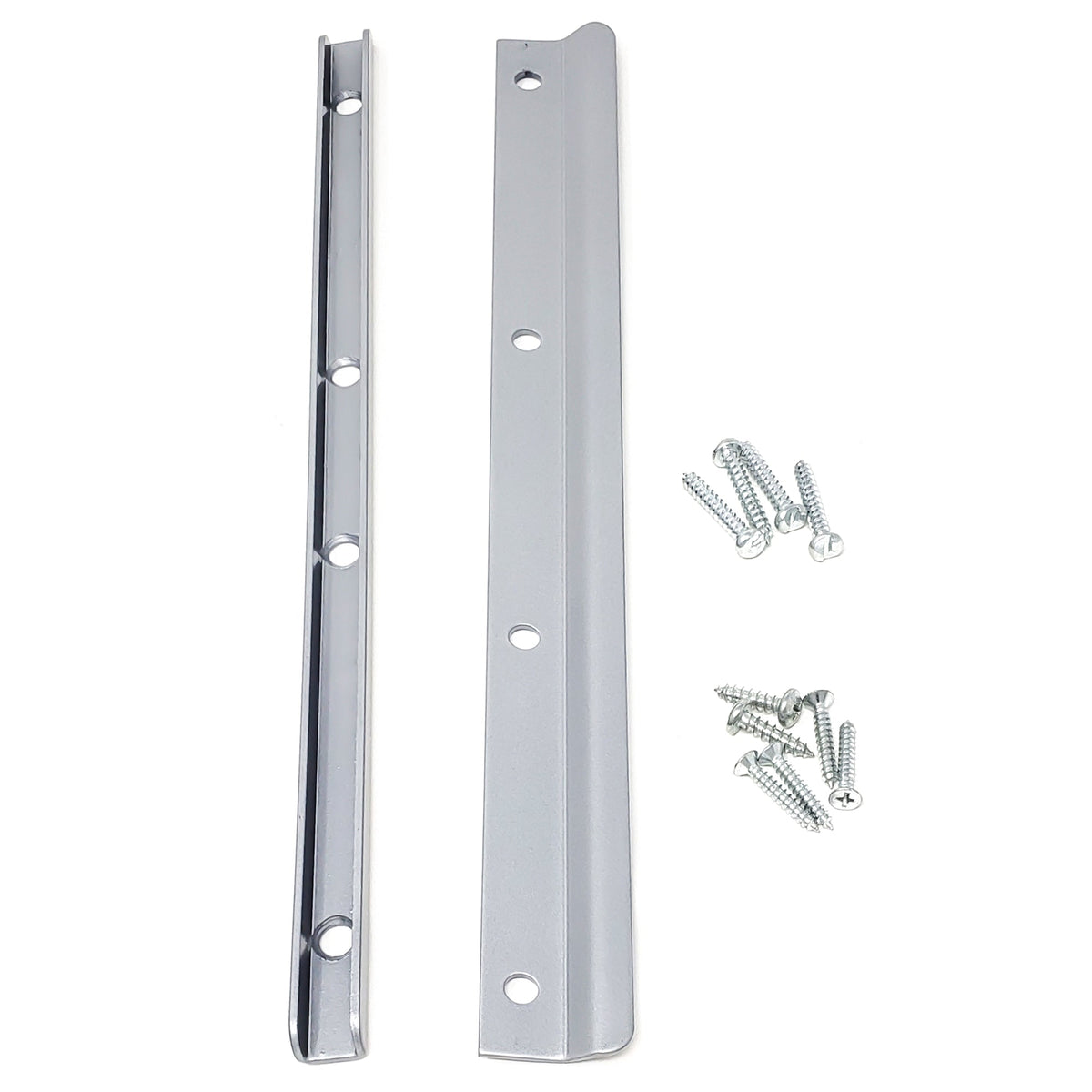
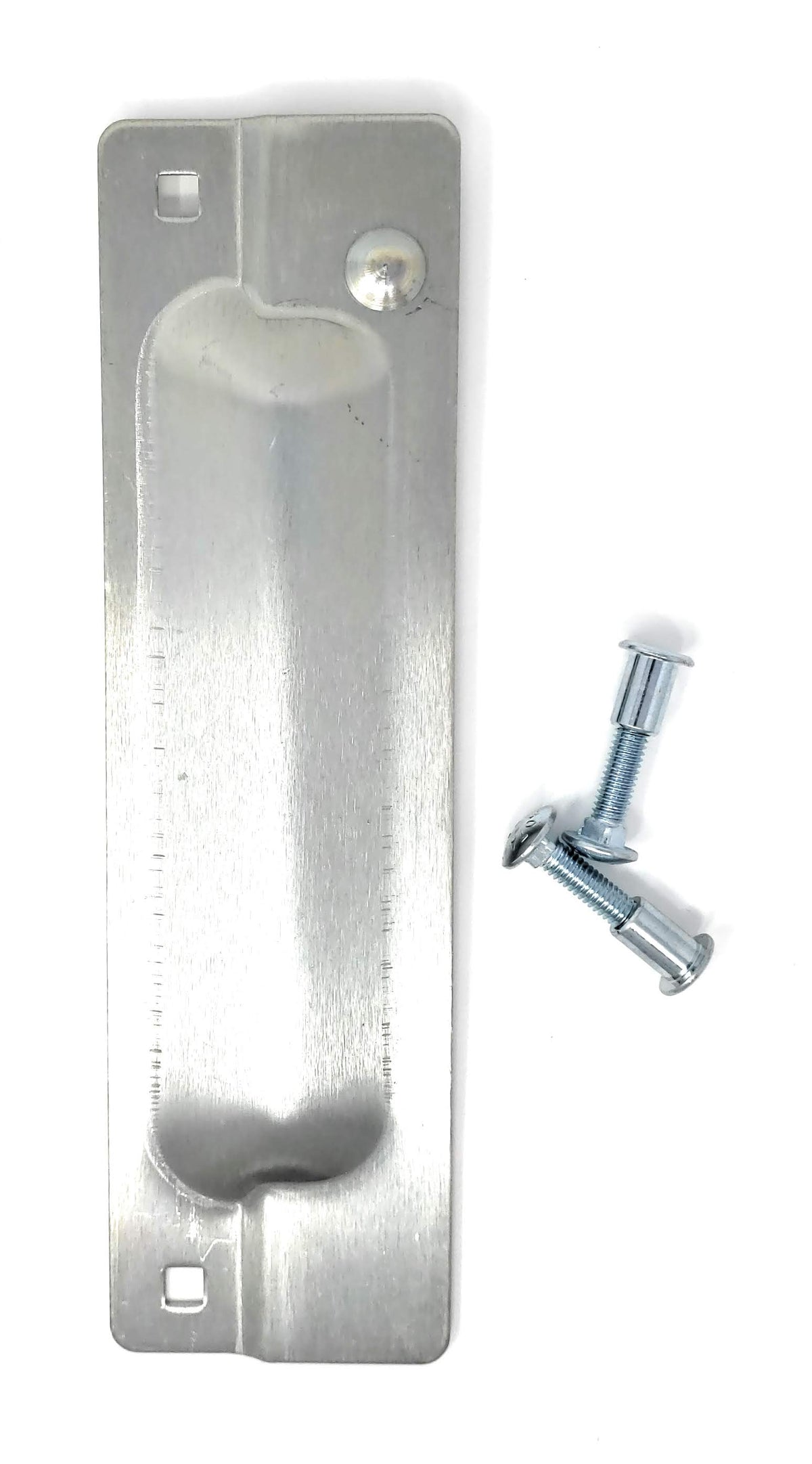
The Latch-Gard LG100ZSF is made for out-swinging doors with a mortise lock. The 3 x 11 inch plate is heavy 13 gauge (0.090 inch) zinc-plated steel and completely covers the latch area. A built-in 1/2 inch jamb pin helps prevent horizontal or vertical prying of the door. It has no cutout for a rose or escutcheon. It's listed for 1-3/4 inch thick exterior commercial steel or wood doors, it's reversible, and it's made in the USA. Shopify notes it may also work with cylindrical knob locks with a small rose.
LATCHPROTECTOR LP225: stainless, 8.75 inch mortise cutout ($22.75)

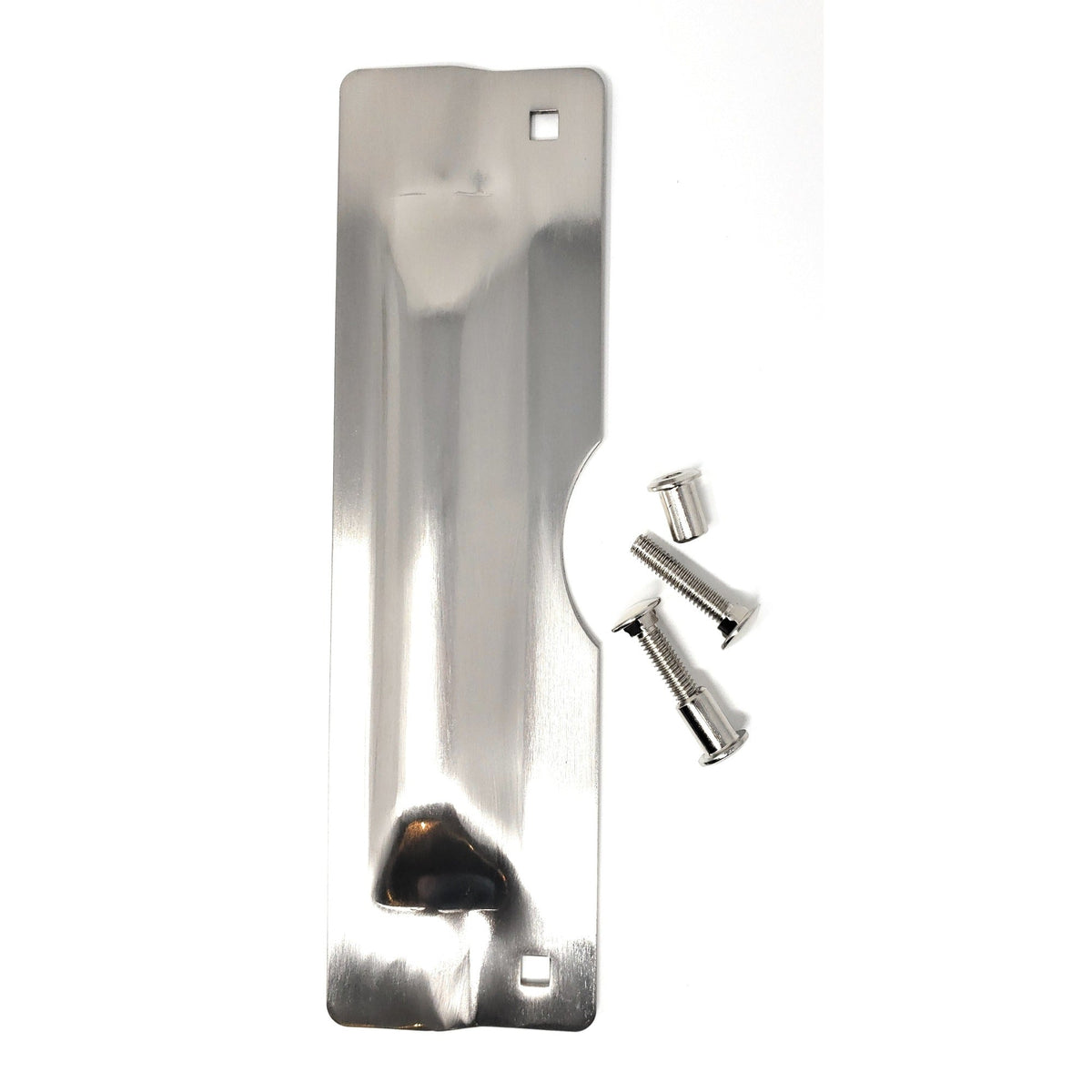
The LATCHPROTECTOR LP225 is a 3.5 x 11.75 inch brushed stainless steel plate with an 8.75 inch cutout that fits a mortise lockset. It's for out-swinging commercial steel or wood doors 1-3/4 inches thick. It's reversible and comes with 18-8 stainless carriage bolts and tamper-resistant flush fasteners.
Need more room? The LP315 is 3.5 x 13 inches with a 10.25 inch cutout for a mortise lockset or a lock and deadbolt ($34.95).
Latch guards for cylindrical locks
Latch-Gard LG110ZSF: 3 x 11 inch, jamb pin, rose cutout ($15.50)

The Latch-Gard LG110ZSF is a 13 gauge zinc-plated plate whose cutout clears a cylindrical lock's rose or escutcheon up to 3-1/2 inches in diameter. It has a jamb pin, it's reversible, and it's made in the USA.
LATCHPROTECTOR LP212: 3 x 11 inch, no jamb pin ($12.50)
The LP212 fits cylindrical locks with a rose up to 3-1/2 inches and a 2-3/4 inch backset. It has no jamb pin and installs with two holes in the door.
Narrow option that lists both lock types
The LP230 ($12.95) and the Latch-Gard LG130Z ($15.45, made in the USA) are 1-3/4 x 10 inch narrow plates. Both list Type 86 mortise and Type 161 cylindrical locks, with a rose or escutcheon of 3-1/2 inches or smaller.
Fit checklist for mortise and cylindrical doors
- Confirm the door swings out. These plates are for outswing doors.
- Identify the lock: small edge faceplate = cylindrical. Tall edge faceplate = mortise.
- Measure the trim: for a rose, measure its diameter. For mortise trim, measure the escutcheon's height and width and compare them with the cutout (LP225: 8.75 inch cutout; LP315: 10.25 inch cutout).
- Check door thickness: these models are listed for 1-3/4 inch doors.
- Decide on a jamb pin: the LG100ZSF and LG110ZSF need one extra hole drilled in the jamb for the pin.
Install notes
The LG100ZSF needs three holes: two through the door and one in the jamb for the pin. It comes with two 5/16-18 x 1-1/2 inch carriage bolts and SF710 tamper-resistant flush fasteners, so the inside finishes flush. The LP225 and LP315 each install with two holes through the door.
FAQ
Can I put a cylindrical-lock latch guard on a mortise lock?
It depends on the trim. Some narrow plates, like the LP230 and LG130Z, list both Type 86 mortise and Type 161 cylindrical locks. For other models, match the cutout to your lock type.
Can I use the LG100ZSF on a cylindrical lock?
Possibly. It's made for mortise locks, and it may also work with cylindrical knob locks that have a small rose. It has no rose cutout, so check how it sits beside your knob before you order. If you want a plate with a rose cutout, the LG110ZSF (with jamb pin) and the LP212 (no pin) both clear a rose up to 3-1/2 inches. Not sure? Email a photo to sales@latchprotector.com.
What does the jamb pin do?
On the LG100ZSF, the built-in pin goes into a hole drilled in the door jamb and helps prevent horizontal or vertical prying of the door.
Which of these are made in the USA?
The Latch-Gard models: LG100ZSF, LG110ZSF and LG130Z.
Stainless or zinc-plated?
The LP225 and LP315 are brushed stainless steel with stainless carriage bolts. The LG100ZSF, LG110ZSF and LP212 are zinc-plated steel.
What if my lock has a deadbolt too?
Look at the LP315, whose 10.25 inch cutout fits a mortise lockset or a lock and deadbolt, or email us with a photo.
Get the right plate for your lock
Mortise lock: start with the LG100ZSF or the stainless LP225. Cylindrical lock: start with the LG110ZSF or the LP212. Ships within 1 business day. Still not sure? Send a photo of your door's latch side and edge to sales@latchprotector.com.