Article: How a Shove Knife Opens an Outswing Door, and the Cheap Fix
How a Shove Knife Opens an Outswing Door, and the Cheap Fix
If you run a shop, a church, a warehouse or an apartment building, you probably have at least one door that you pull open from the outside: the back door, the service door, the side exit. Those outswing doors have a weak spot that's easy to miss, and a thin, cheap tool called a shove knife is built to take advantage of it. Here's what a shove knife is, why outswing doors are exposed, and the simple steel plate that closes the gap.
What is a shove knife?
A shove knife is a thin, flat strip of spring steel with a curved or hooked end. It's thin enough to slide into the narrow gap between a door and its frame, and flexible enough to bend around the edge of the door. Locksmiths use tools like it, and so do people who want into a building without a key.
We won't get into technique here. The idea is what matters: if someone can reach your latch from outside, they may be able to move it without touching the lock.
How it beats a spring latch
Most knob and lever locks use a spring latch, the angled bolt that clicks into the frame when the door closes. That angle is what lets the door shut on its own: the frame pushes on the slanted face and the latch slides back, then springs out into the strike.
The catch is that anything pushing on that slanted face can slide the latch back, not just the frame. A shove knife slipped into the gap can press on the latch the same way the frame does. If the latch moves, the door opens, and the lock itself was never touched.
Why outswing doors are the easy target
On an inswing door, the door closes against a stop on the inside, so the latch edge is tucked behind the frame.
On an outswing door, it's the other way around. The door closes toward you, and the edge where the latch sits lines up with the gap between the door and the frame on the outside. That puts the latch right where someone standing outside can reach it with a thin blade. Outswing doors are common on commercial back doors, service doors and exits, which is why so many businesses have this weak spot without knowing it.
(Not sure which way your door swings? See Outswing vs. Inswing Doors: Which Latch Guard Do You Need?)
The cheap fix: a steel latch guard
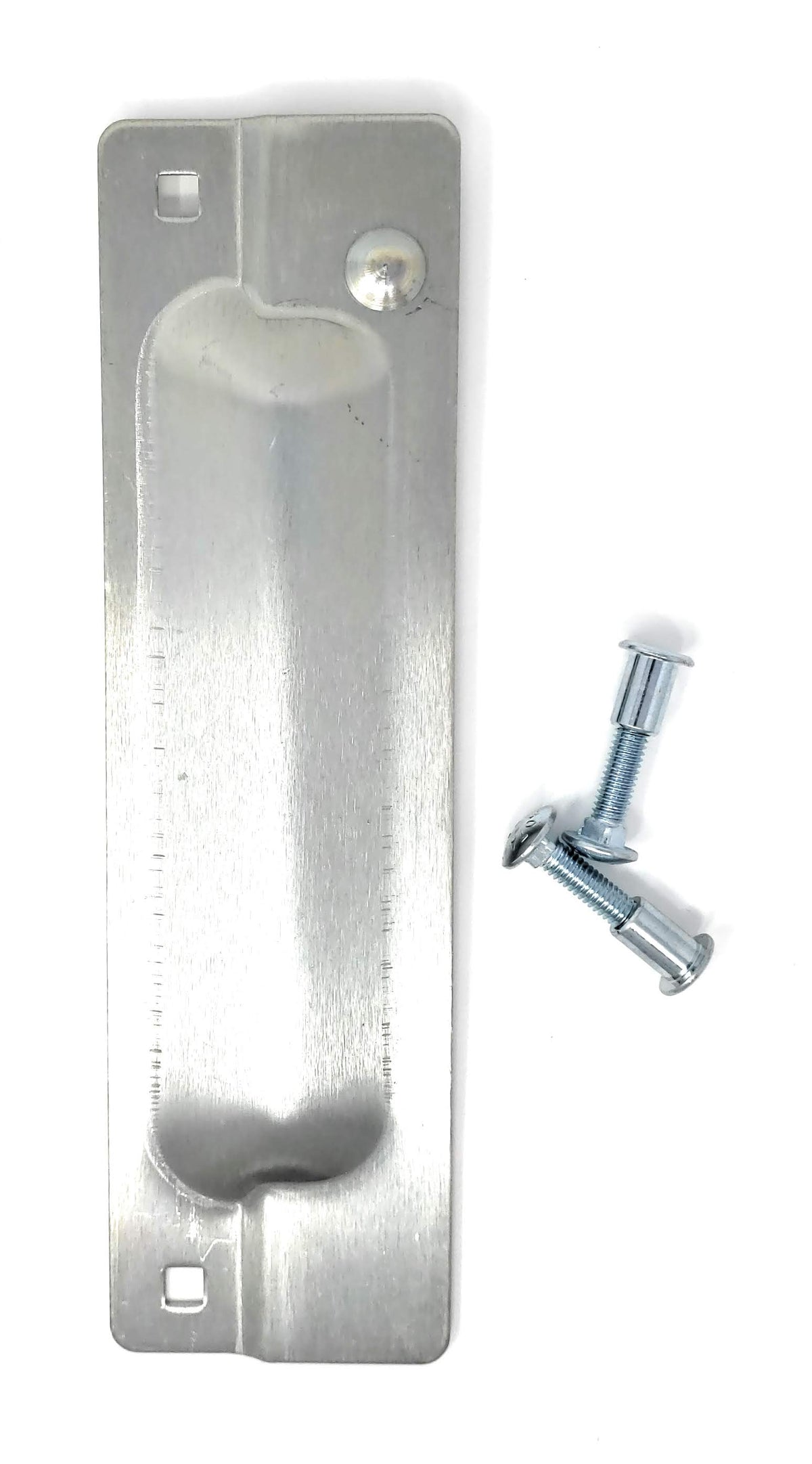
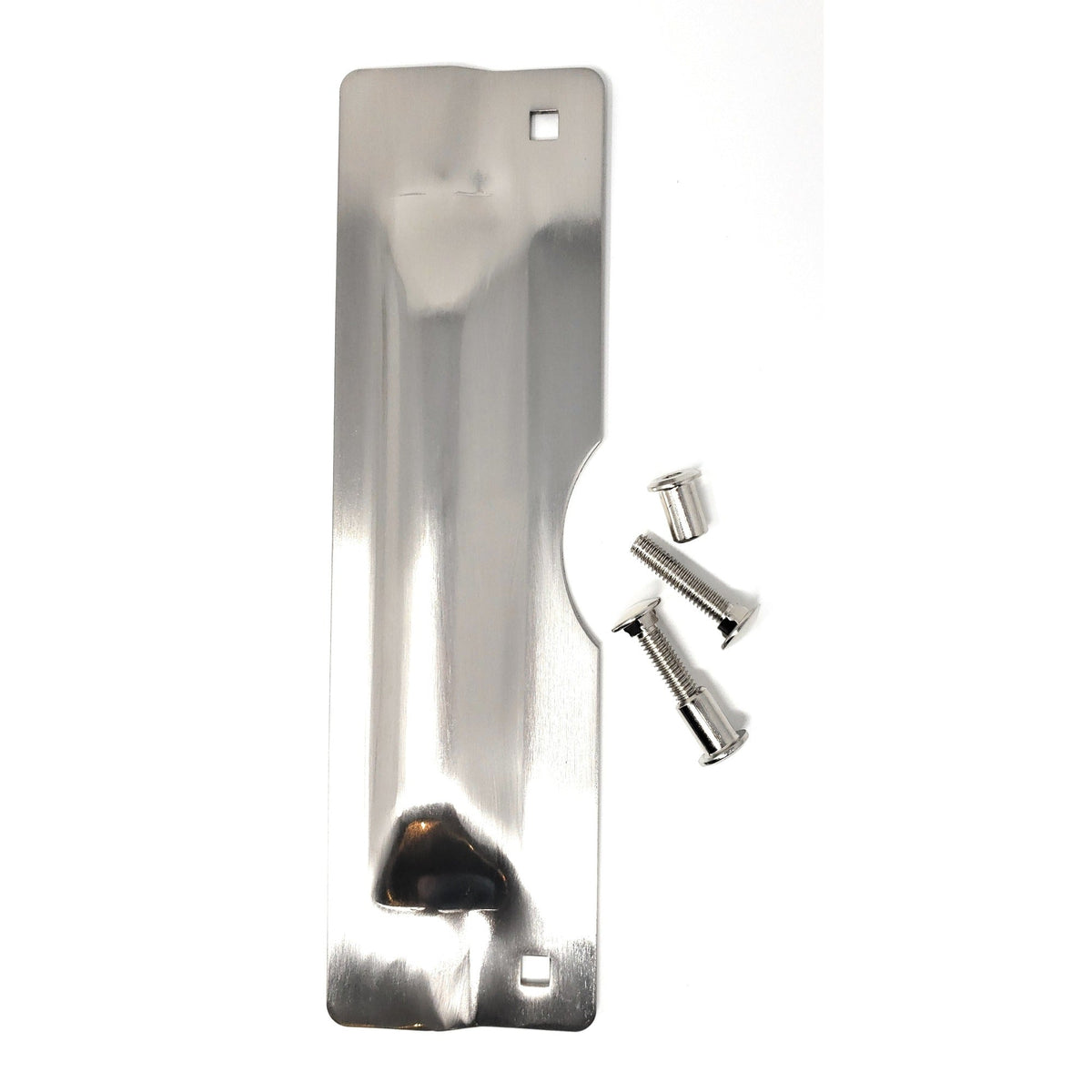
A latch guard is a steel plate that bolts to the outside face of an outswing door, right over the latch. It covers the gap between the door and the frame at the latch, so the latch bolt can't be reached and pushed back from outside. No blade gets to the latch, so there's nothing to push on.
A latch guard doesn't replace your lock. It protects the part of the lock a shove knife goes after. Some models add a jamb pin, a pin on the plate that goes into a hole drilled in the door jamb, which helps keep the door from being pried off the jamb.
It's also one of the cheapest upgrades you can make to a door: the LP212 below is $12.50.
Picking the right guard
The plate has to fit around your lock's trim, so start with the lock you have.
Knob or lever on a round rose (cylindrical lock):
- LATCHPROTECTOR LP212 ($12.50): 3 x 11 inch, 12 gauge zinc-plated steel. Clears a rose or escutcheon up to 3-1/2 inches with a 2-3/4 inch backset. No jamb pin; two holes in the door.
- Latch-Gard LG110ZSF ($15.50): 3 x 11 inch, 13 gauge zinc-plated steel, with a jamb pin and SF710 tamper-resistant flush fasteners. Clears a rose up to 3-1/2 inches. Made in the USA.
- Latch-Gard LG110ZSFNP ($15.50): the same 3 x 11 inch, 13 gauge plate with a rose cutout, but no jamb pin. Made in the USA.
Knob and deadbolt together: the LP215 ($15.75) has a full-length cutout.
Tight space beside the lock: the LP230 ($12.95) is a narrow 1-3/4 x 10 inch plate.
Mortise lock: the stainless LP225 ($22.75) has an 8.75 inch cutout for a mortise lockset. For more options, see Latch Guards for Mortise vs. Cylindrical Locks.
The 3 x 11 inch models above are listed for 1-3/4 inch thick out-swinging doors and are reversible for left- or right-hand openings. Inswing door? A plate over the latch isn't the right design. Look at the LP300 inswing latch shield ($8.75) instead.

Installing a latch guard
Most of our outswing guards install by drilling two holes through the door and fastening the plate with the included carriage bolts and tamper-resistant flush fasteners. Models with a jamb pin, like the LG110ZSF, need one more hole in the jamb for the pin. Watch the full install before you drill:
FAQ
Does a latch guard work if my door already has a good lock?
Yes, they work together. The lock keeps the latch from turning with the handle. The guard covers the latch at the frame gap, so it can't be pushed back from outside.
Do I need one on an inswing door?
Outswing plates are made for out-swinging doors. For an inswing door, use an inswing latch shield like the LP300.
Not sure which model fits?
Email a photo of your door's latch side and edge to sales@latchprotector.com, along with which way it swings, and we'll help you pick.
Close the gap on your outswing doors
If your back door, service door or side exit swings out, take a look at the latch from the outside. If you can see the gap, a steel latch guard covers it. Start with the LP212 or the made-in-USA LG110ZSF, or browse every model at latchprotector.com. Ships within 1 business day. Questions, or securing several doors? Email sales@latchprotector.com.